
In the Late Cretaceous seas, a 19-meter giant octopus was at the top of the food chain; AI analysis of fossils overturns conventional wisdom
TL;DR AI
2 min readKey summary
A Hokkaido University-led team used AI to analyze 27 Late Cretaceous jaw fossils.
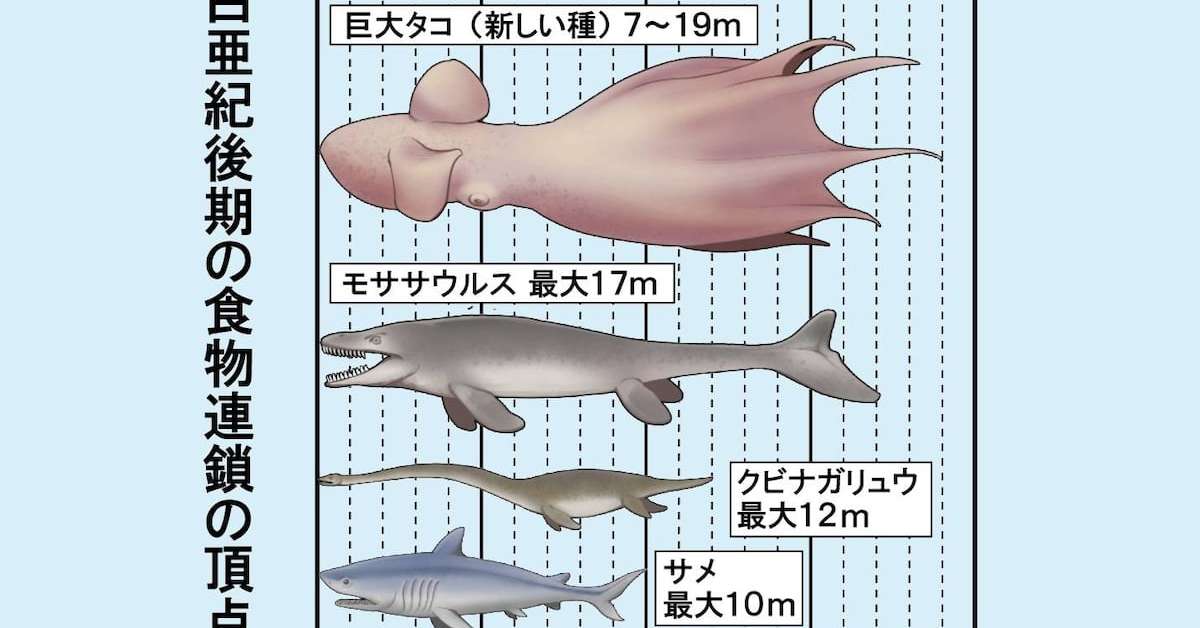
The study suggests octopus-like cephalopods may have grown 7 to 19 meters long and hunted as large carnivores.
That would make a giant octopus a possible apex predator in ancient seas, alongside mosasaurs, plesiosaurs, and sharks.
The finding could significantly revise ideas about marine food chains and ancient life.
Same topic