Spin waves travel along Z-shaped path 5,000x more efficiently, boosting energy-efficient computing
TL;DR AI
2 min readKey summary
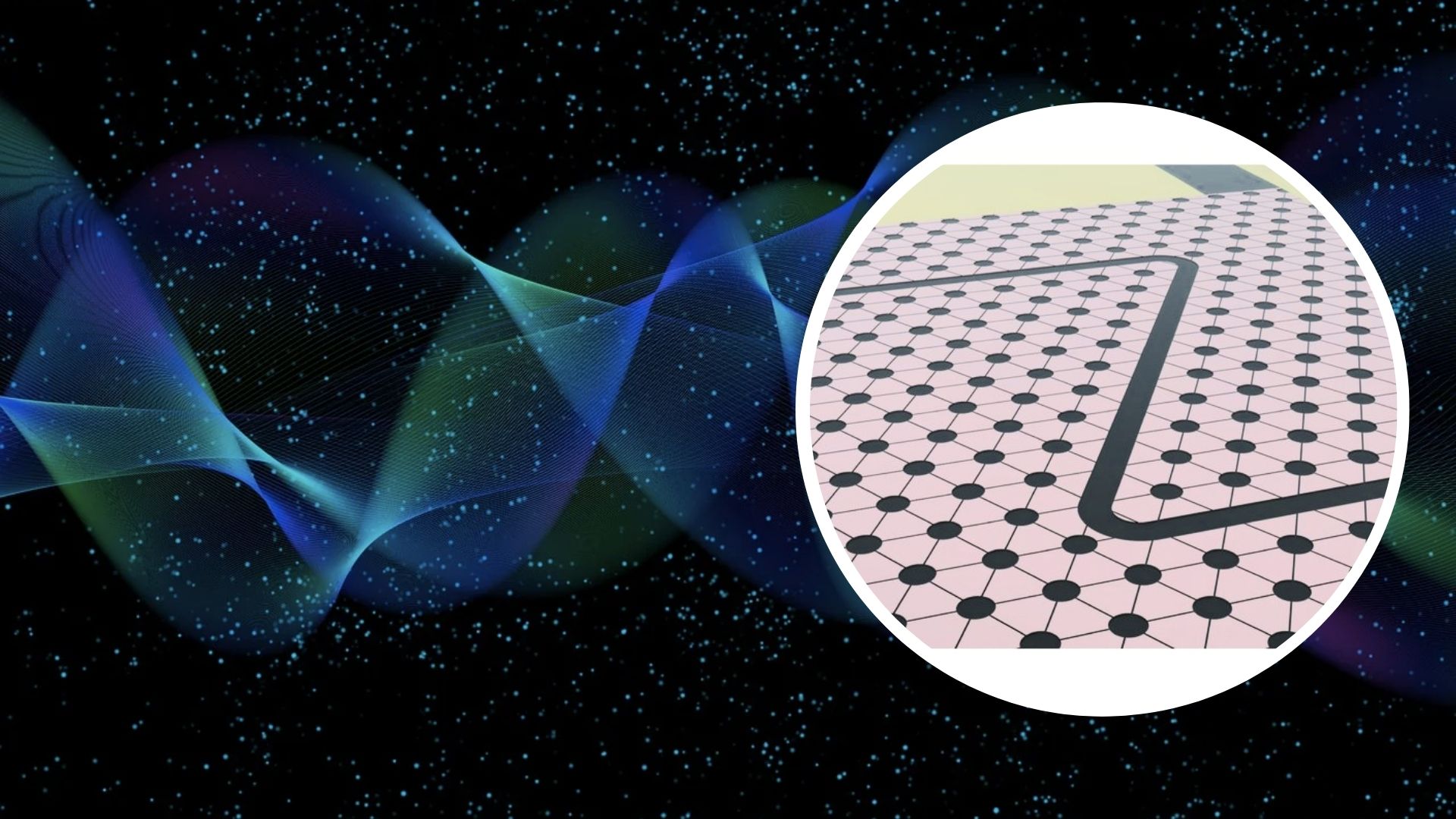
Researchers from Tohoku University, Shin-Etsu Chemical, and EPFL developed a 2D magnonic crystal on yttrium iron garnet that guides spin waves through 120-degree Z-shaped bends with very low loss.
Simulations show the copper-hole array creates a complete magnonic bandgap, enabling much stronger transmission than ridge-type waveguides.
The new design transmits spin waves about 5.7 × 10^3 times more strongly than conventional waveguides.
A patent has already been filed, and the approach could support lower-power computing hardware and reduce data-center electricity use.
Same topic