
Japanese scientists make ytterbium atomic clock that could detect dark matter
TL;DR AI
2 min readKey summary
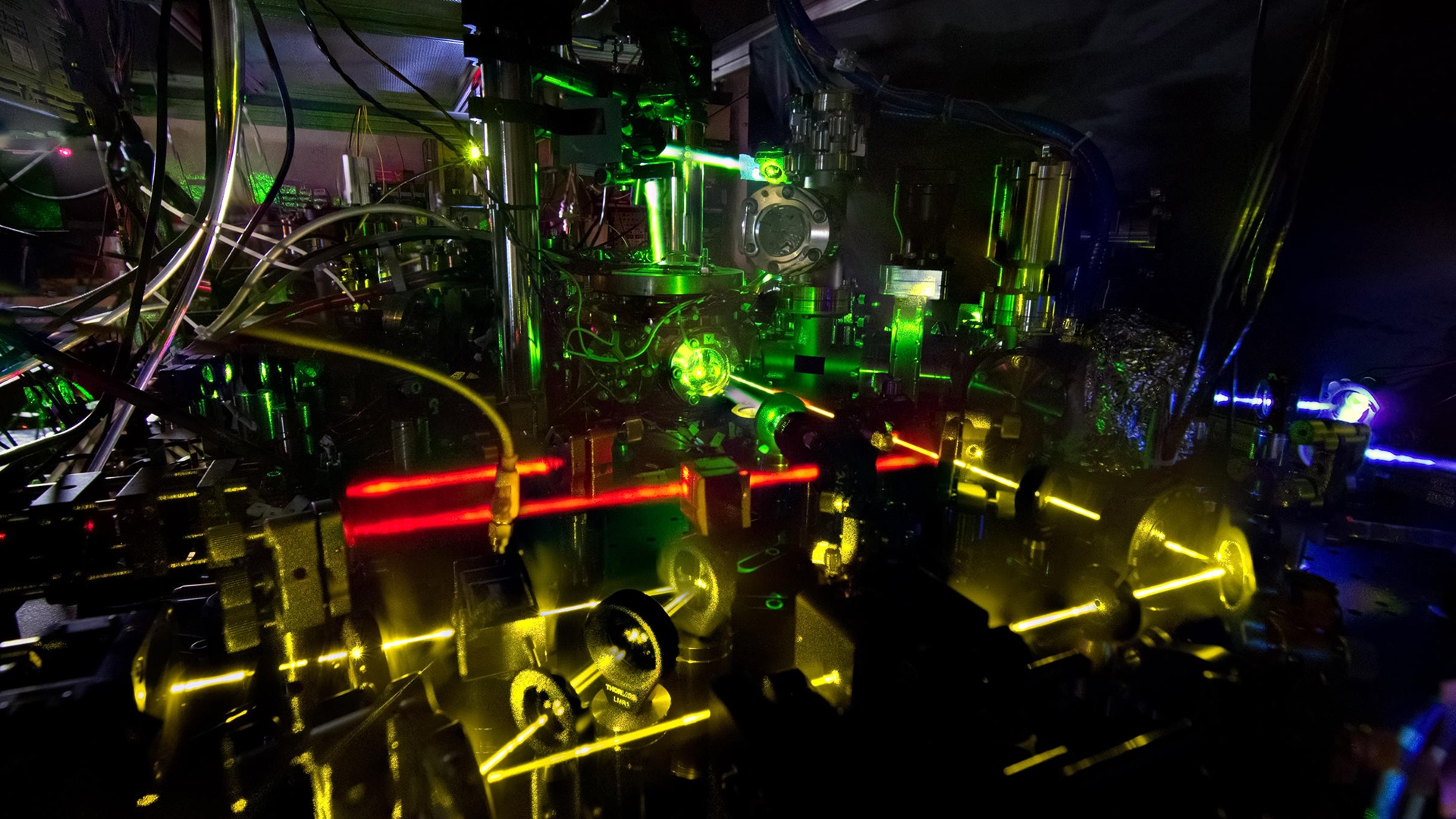
Researchers at Kyoto University built an atomic clock using a rare inner-shell orbital transition in ytterbium.
They used a three-dimensional optical lattice at a magic wavelength and a stabilized excitation laser to reduce measurement shifts.
The team achieved an 80 Hz spectral linewidth and measured isotope shifts to one part in a billion, enabling sensitive tests for physics beyond the Standard Model.
The work was published in Nature Photonics and could allow searches for new bosons or dark matter effects.