
Nanoreactor Mimics Living Cells To Supercharge Artificial Photosynthesis
TL;DR AI
2 min readKey summary
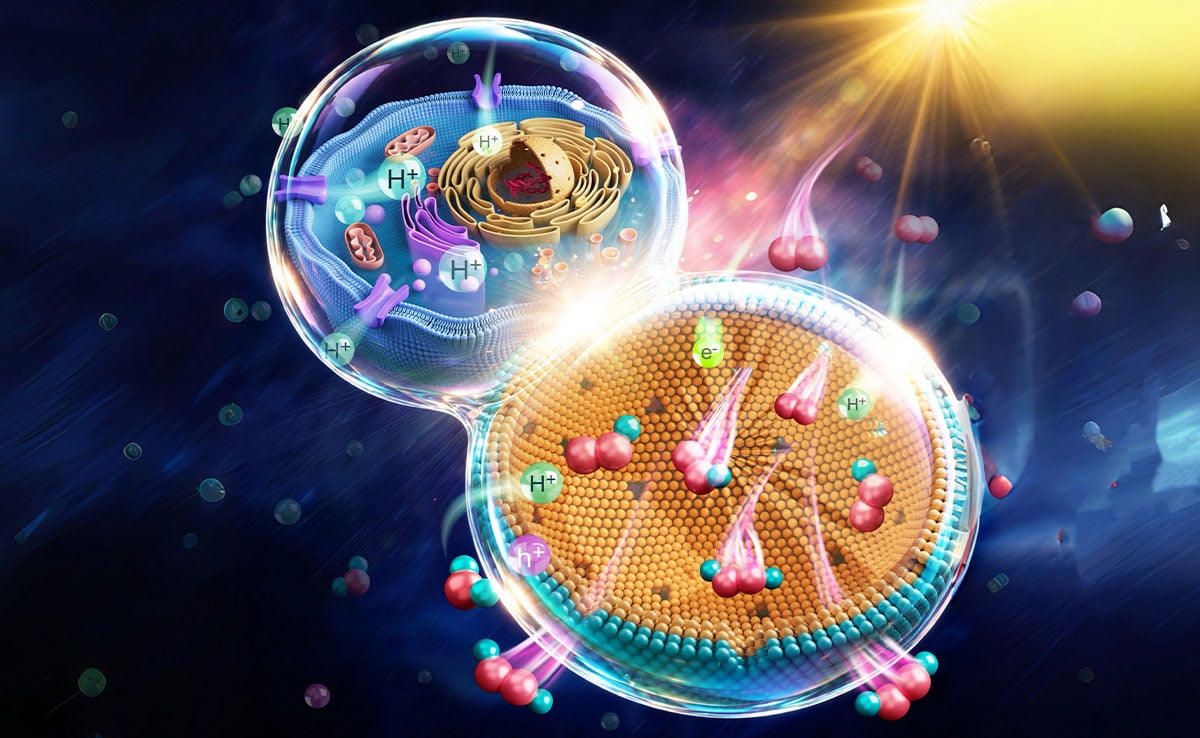
Researchers built a hollow CdS@polydopamine nanoreactor that mimics cellular compartmentalization and proton-relay chemistry.
The biomimetic design improves proton-coupled electron transfer, light harvesting, and reaction balance for visible-light hydrogen peroxide production.
The system achieved 3.24 mmol gcat.-1 h-1 and 1.2% solar-to-chemical efficiency, with strong performance under natural sunlight.
Embedding the catalyst in sodium alginate hydrogel made it recyclable and more stable, suggesting a useful platform for artificial photosynthesis and green synthesis.